Choosing a heat pump in Quebec means weighing three families of equipment, a demanding climate reality, and a capacity calculation that determines both your comfort and the amount of financial assistance you'll receive. A Quebec heat pump must be able to heat reliably well below zero, and not every model can do that. This guide explains how to decide: the types available, what a cold-climate heat pump really is, how to size it without oversizing it, what each solution costs before subsidies, and how Hydro-Quebec's LogisVert assistance helps bring down the bill.
What are the three main types of heat pump in Quebec
The ductless air-to-air (mini-split) heat pump is the dominant choice in Quebec for its cost-performance ratio and quick installation. A single outdoor unit can feed 2 to 8 indoor wall-mounted units and heats or cools room by room, with no ductwork. It's the most accessible option for adding efficient heating and air conditioning to a home already equipped with electric baseboards.
The central air-to-air heat pump, on the other hand, connects to a forced-air duct network and serves the whole house. It often replaces an existing furnace, but the size of the ducts already in place can limit the capacity you can install. The air-to-water (hydronic) heat pump draws heat from the outdoor air and transfers it to a water circuit: radiant floors, radiators or a hot water tank. Its installation cost falls between air-to-air and geothermal.
Finally, the geothermal heat pump captures heat from the ground using loops drilled vertically or laid horizontally. Because ground temperature varies little, it offers the highest and most stable efficiency, but also the heaviest and most expensive installation. The well capacity has to cover the total BTU capacity of the unit.
How does a heat pump perform in extreme cold in Quebec
This is the deciding factor at our latitude. A standard heat pump, not designed for cold climates, loses a lot of capacity and generally stops being effective around -12 °C to -15 °C; backup heating then takes over. For a Quebec home, that means the unit no longer covers the peak of winter at the very moment you need it most.
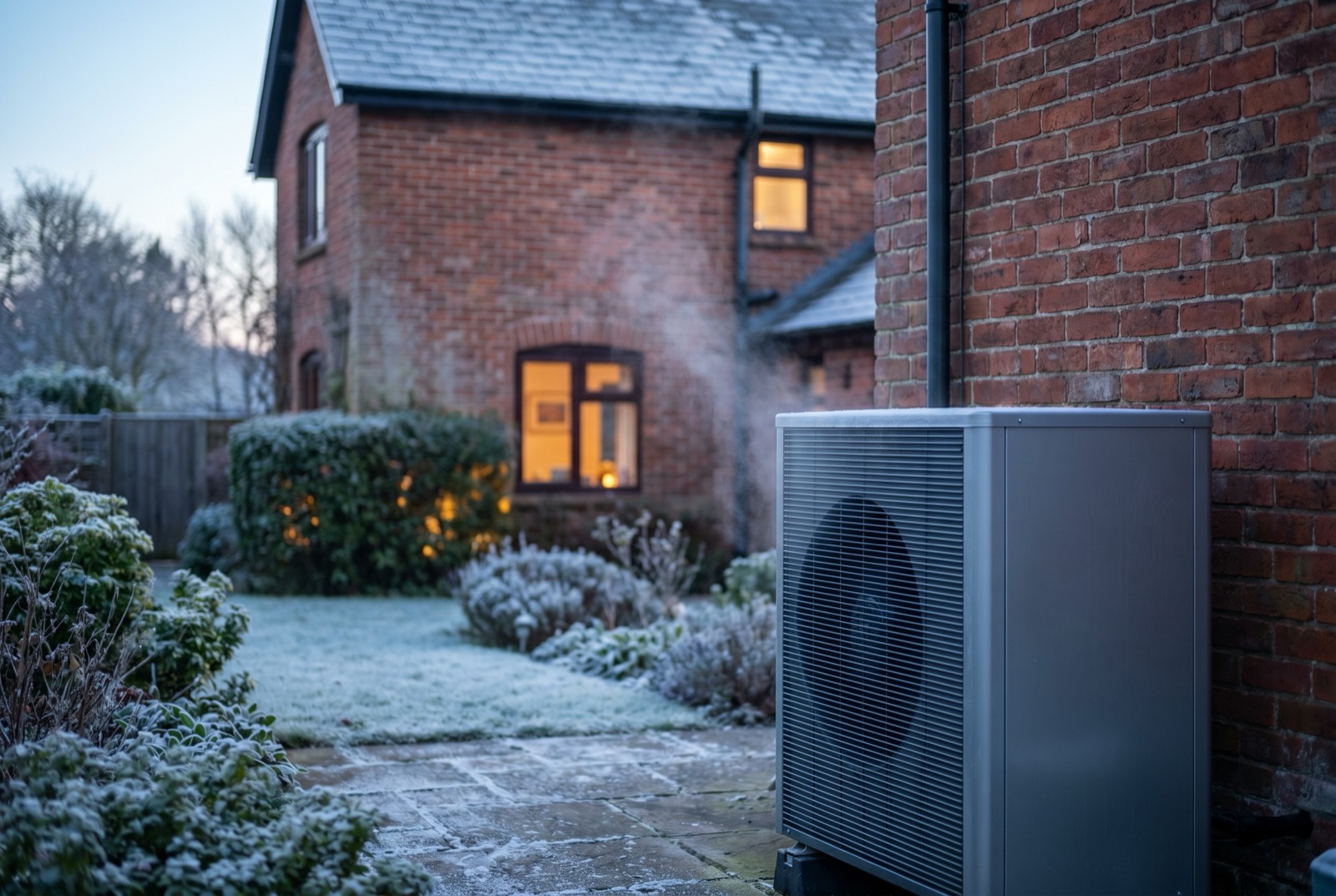
So-called "cold-climate" heat pumps (ccASHP) use a variable-speed compressor (Inverter technology) and operate reliably down to -20 °C and beyond, with some models going as low as -30 °C without backup. As examples cited by Écohabitation, the Mitsubishi ZUBA operates down to -30 °C (HSPF 9.4) and the Carrier Infinity GreenSpeed down to about -19.4 °C (HSPF 13). Lines reputed for cold-climate performance also include Mitsubishi Hyper-Heat (H2i), Fujitsu XLTH, Bosch, Gree and Daikin.
The coefficient of performance (COP) sums up efficiency: in mild temperatures, a heat pump produces roughly 3 to 4 kW of heat per kW of electricity consumed (COP of 3 to 4). In intense cold, a cold-climate model's COP holds around 2, or about 200 % efficiency — still clearly better than an electric baseboard. The COP fluctuates from about 2 to 5.4 depending on outdoor temperature.
Which performance ratings to check before buying
Two ratings matter. The HSPF/CPSC measures seasonal heating efficiency: the regulatory minimum in Canada is 6, ENERGY STAR requires at least 7.2, and a "cold-climate" model requires at least 8.1. For a Quebec winter, aim for 10 or more; above 13 is excellent. The SEER2/RES measures cooling: minimum 14.3 in Canada, and at least 15.2 for ENERGY STAR.
A key point: don't rely on the rated HSPF alone. Check the heating capacity actually maintained at low temperature (for example at -15 °C or -20 °C) and the COP at those temperatures. The NEEP directory lists ccASHPs with their low-temperature capacity data, which helps you compare objectively. As of November 26, 2025, to be eligible for Hydro-Quebec's LogisVert program, heat pumps must be ENERGY STAR certified — the former criterion based on the NEEP directory has been replaced. Verify this requirement against the rate schedule in effect before you buy.
- HSPF/CPSC: aim for 10 or more (excellent at 13 and above)
- SEER2: aim for at least 15.2 (ENERGY STAR requirement)
- Heating capacity maintained at -15 °C / -20 °C, not just the rated HSPF
- Variable-speed (Inverter) compressor and a good turndown ratio to modulate without cycling
- ENERGY STAR certification, required for LogisVert
How to properly size your heat pump in BTU/h
Sizing should not rely on a simple per-square-foot rule. It must be based on a heat load calculation following the CSA F280 standard (or the equivalent ACCA Manual J). This calculation accounts for conduction losses through walls and windows, air infiltration, internal gains (appliances, occupants), and orientation or solar exposure. The design heating load is the heat required to maintain 22 °C indoors under the standard's design conditions.
Natural Resources Canada's sizing rule suggests a capacity that covers the load, with 125 % of the design heating load as a reasonable minimum size (the former upper limit of 140 % was removed from the latest version of the standard). For cooling, you aim for between 100 % and 125 % of the load to avoid sub-cooling. The thermal balance point is the outdoor temperature where the heat pump's capacity crosses the building's load; below it, backup heating is required. A well-sized variable-capacity cold-climate heat pump can cover nearly the entire season.
Watch out for oversizing, a common mistake: an overly powerful unit short-cycles repeatedly, creates discomfort, wears out faster, and dehumidifies poorly in summer. The turndown ratio, for example 3:1, indicates the modulation range: the higher it is, the more finely the unit adjusts its output without constantly stopping and restarting, which improves seasonal efficiency. Demand the CSA F280 load calculation from your installer, not a "rule of thumb" sizing.
How much does a heat pump cost in Quebec before subsidies
What a heat pump costs to install in Quebec varies widely by model, home and region, and every project is quoted individually. The technology you choose is the biggest driver: a ductless air-to-air unit is the most affordable, a central air-to-air system sits above it, while air-to-water and especially geothermal are significantly more expensive because of the ground loop (horizontal or vertical) and the heat load they cover. Capacity (BTU/h at -8 °C), the number of indoor heads, the condition of your existing ductwork, and site access also move the price. The only reliable figure comes from an on-site survey and a written quote — ask an RBQ-licensed installer for a free assessment of your home.
What LogisVert assistance is available for a heat pump in Quebec
LogisVert is Hydro-Quebec's financial assistance program for residential energy efficiency, launched in 2024. It pays a direct rebate to the customer (not a credit on the bill). The calculation is based on capacity at -8 °C, which is important to understand: it's not the rated capacity, but rather the capacity maintained in extreme cold that determines the amount.
- ENERGY STAR certified air-to-air heat pump (standard): $50 per 1,000 BTU/h at -8 °C
- Air-to-air heat pump rated "cold-climate": $120 per 1,000 BTU/h at -8 °C
- Eligible multi-unit residential building bonus: +$100 per 1,000 BTU/h, up to $220 per 1,000 BTU/h for a multi-unit dwelling
- Geothermal (residential customer stream): $250 per 1,000 BTU/h, up to a maximum of $18,000 per address, since August 25, 2025
For geothermal, two rate schedules coexist on Hydro-Quebec's site but target different audiences: the residential customer receives $250 per 1,000 BTU/h (capped at $18,000), while the $750-per-1,000-BTU/h schedule (capped at $54,000, that is 72,000 BTU/h or a 6-ton unit) is aimed at the installation company or partner builder. For individuals, the $250 rate applies. For the central air-to-water heat pump, the exact amount is not confirmed on an official page: rely on the LogisVert rate schedule in effect at the time of your project. LogisVert can also be combined with Rénoclimat and, where applicable, with Chauffez vert and certain federal programs; the total depends on the project and on each program's rate schedule.
The process is done after installation, through the LogisVert portal (available in French only). You provide proof of eligibility, the purchase and installation invoices, and photos of the nameplate. You have nine months from the installation date to submit, and the assistance is paid by mail after review and approval. The program is presented as ongoing, subject to change, with no end date announced to date.
Why insist on an RBQ-licensed contractor
To be eligible for LogisVert, the installation must be carried out by a company registered with the Quebec Enterprise Registrar (REQ) and holding the appropriate licences from the Régie du bâtiment du Québec (RBQ). Beyond eligibility for the assistance, it's a protection: the RBQ licence comes with a security bond ($20,000 for a specialized contractor, $40,000 for a general contractor) that can compensate the customer in the event of lost deposits, unfinished work, or defects discovered within the year. You can check a licence for free on the registry at rbq.gouv.qc.ca in under 30 seconds, by name or by number (format XXXX-XXXX-XX).
Hiring an unlicensed contractor exposes you to several risks: loss of the security bond, weakened civil recourse (the contract can be voided) and, above all, denial of the financial assistance since LogisVert requires a valid licence. A sloppy sizing job or a non-compliant installation can also compromise the unit's extreme-cold performance.
How to maintain your heat pump to preserve its efficiency
Regular maintenance protects your investment. Clean the filters regularly, per the manufacturer's recommendations (anywhere from a few weeks to a few months depending on use), and plan for periodic deep cleaning of the coils. A well-maintained heat pump can use up to 25 % less energy than a neglected one. In winter, clear the outdoor unit of snow and ice and check the defrost drainage. Periodic professional servicing (refrigerant, electrical, airflow) is recommended. As for lifespan, count on about 15 to 20 years for an air-to-air or air-to-water unit; for geothermal, up to 20 years for the unit and up to 50 years for the underground loop.
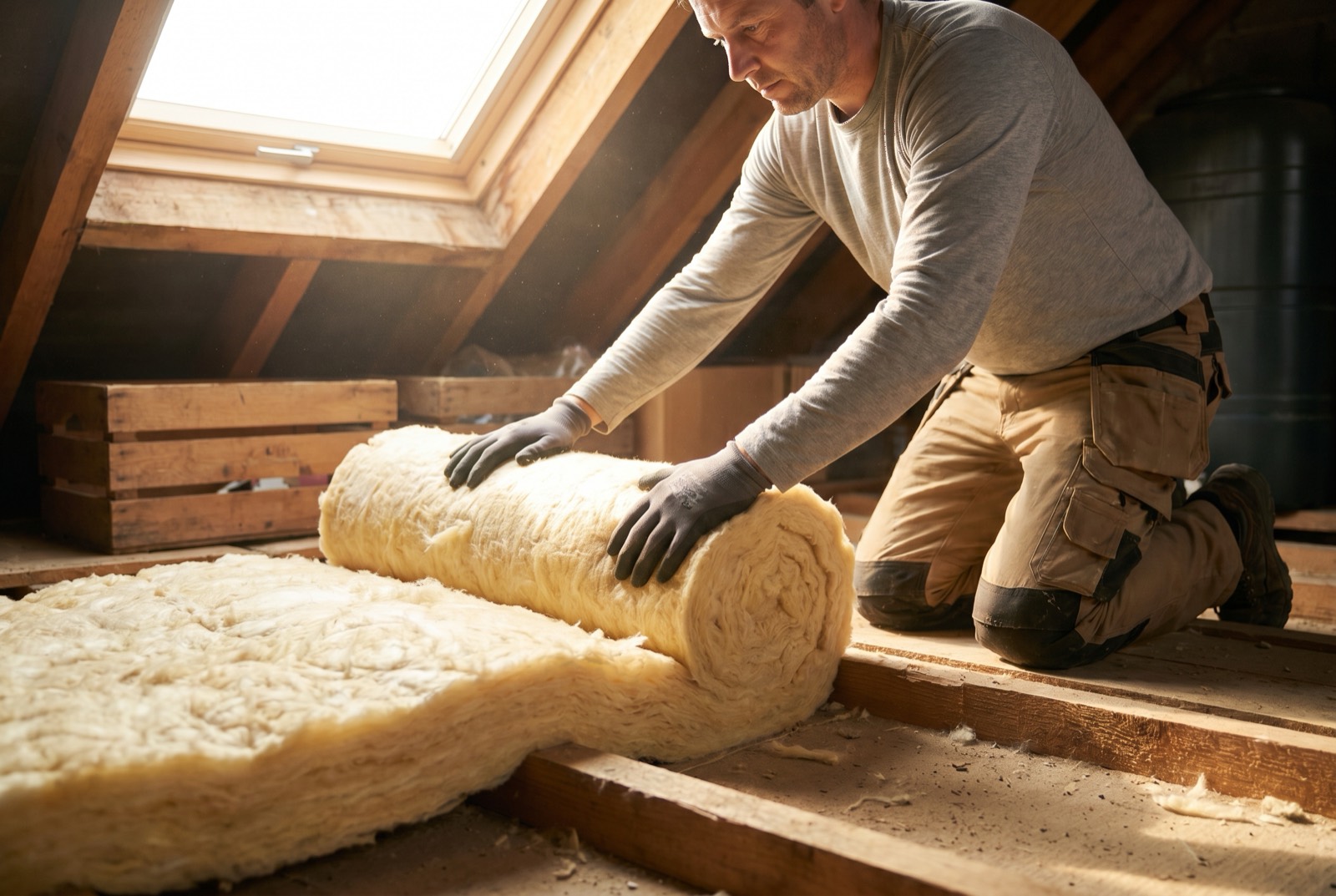
A high-performance heat pump is useless if the heat escapes through the walls: insulation first, heating second.
LogisVert principle, Hydro-Quebec
This principle is worth repeating: Hydro-Quebec estimates that about 75 % of a home's heat is lost through the building envelope. Before or alongside buying a heat pump, it's often worthwhile to improve insulation and air-tightness — work supported by the Rénoclimat program since it stopped subsidizing heating.
Frequently asked questions
Is a heat pump enough to get through a Quebec winter? A properly sized variable-capacity cold-climate heat pump can cover nearly the entire season. It's still wise to plan a backup heating strategy (baseboards, furnace or dual-energy) for periods below the thermal balance point.
Ductless or central: which to choose? The ductless unit suits homes heated with baseboards well and offers the best cost-performance ratio with quick installation. The central unit makes sense if you're replacing a furnace and already have ducts, keeping in mind that the size of those ducts can limit the capacity you can install.
How does LogisVert calculate the amount? Based on capacity at -8 °C, not rated capacity. For air-to-air, count on $50 per 1,000 BTU/h (ENERGY STAR standard) or $120 per 1,000 BTU/h (cold-climate); for geothermal on the residential customer side, $250 per 1,000 BTU/h up to $18,000 per address.
How long do you have to apply for the assistance? You have nine months from the installation date to submit your application on the LogisVert portal, with invoices and photos of the nameplate.
Amounts, caps and eligibility conditions change. Before committing, always validate the rate schedules in effect with the official sources: Hydro-Quebec for LogisVert, Transition énergétique Québec (quebec.ca) for Rénoclimat, and the RBQ for your installer's licence and security bond. These checks save you from unpleasant surprises and ensure your eligibility for the assistance.
Related on Québec Rénovation